
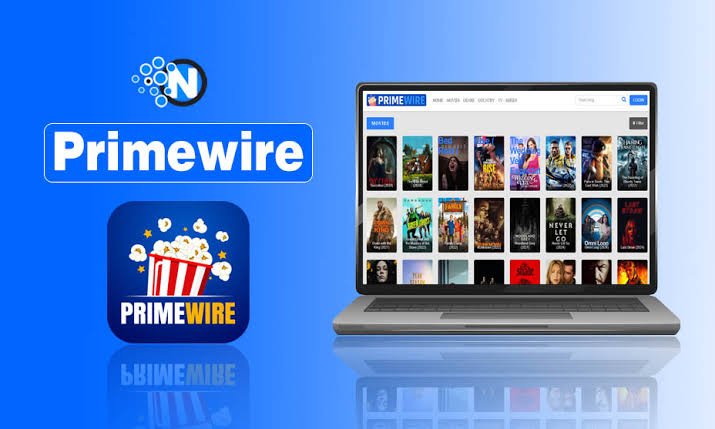
A serious Primewire review has to look beyond the obvious attraction of free movies and television shows. The platform became popular because it appeared to offer a huge catalog without subscription fees, but convenience is only one part of the decision. Users also need to consider copyright status, unstable domains, intrusive advertising, privacy exposure, fake copies, and the possibility of malware.
The practical verdict in this Primewire review is straightforward: PrimeWire may look convenient, but its uncertain legal footing and inconsistent security environment make it difficult to recommend. This guide explains what the service is, why people still search for it, what can go wrong, and which safer streaming options deserve attention.
Primewire Review: Quick Verdict for Busy Readers
This Primewire review gives the platform an editorial score of 2.1 out of 5. That score is not based on a laboratory audit of every site using the PrimeWire name. It reflects the broader service model, its documented legal history, its reliance on third-party video sources, and the risks created by unofficial copies and changing domains.
PrimeWire at a Glance
| Review factor | Assessment |
|---|---|
| Content selection | Broad in appearance, but availability is inconsistent |
| Cost | Usually presented as free |
| Account requirement | Varies by site or clone |
| Streaming reliability | Unpredictable |
| Advertising experience | Often disruptive on unauthorized streaming sites |
| Legal confidence | Low |
| Privacy confidence | Low |
| Overall recommendation | Choose a licensed alternative |
The most important point in any Primewire review is that there is no dependable way for an ordinary visitor to confirm that a particular PrimeWire-branded website is operated by the same people as an earlier version. A familiar logo, layout, or domain name is not proof of authenticity.
What Is PrimeWire and How Does It Work?
PrimeWire is best understood as a streaming-link index rather than a conventional licensed streaming platform. Historically, users searched for a movie or series, selected a title, and then chose from links or embedded players connected to third-party hosting services.
That distinction matters.
A licensed platform generally controls its app, content agreements, playback environment, billing relationship, and customer support. A link-indexing site may send users into a chain of external players, advertisements, redirects, and hosting providers that it does not fully control.
Court reporting on the platform’s legal dispute described PrimeWire as a site where users submitted links to videos hosted elsewhere. In 2022, a United States court found the service liable for copyright infringement and ordered targeted domains to be shut down; a later judgment awarded approximately $20.7 million in damages.
That history explains why a modern Primewire review cannot treat every current website carrying the name as one stable product. Domains disappear, replacements emerge, and lookalike sites can copy branding with very little effort.
Primewire Review of the User Experience
At first glance, the appeal described in this Primewire review is easy to understand. Search-driven streaming indexes often place a large number of titles in one interface. Users may see posters, genre pages, release dates, episode lists, ratings, and multiple playback links.
The experience becomes less attractive once playback begins.
A title may have several sources, yet some links can be broken, mislabeled, low resolution, out of sync, or unavailable in a particular country. The user may need to test multiple players before finding one that works.
Navigation Can Feel Familiar but Not Trustworthy
Many versions use a layout that resembles a normal streaming catalog. That familiarity reduces friction, but it can also create false confidence.
Professional-looking design does not confirm licensing, security controls, or ownership.
A legitimate service normally provides:
- Clear company information
- Detailed privacy terms
- Reliable customer support
- Device compatibility information
- Account-recovery options
- Transparent payment policies
- Licensing or distribution information
An unverified streaming clone may offer little more than a contact form—or no meaningful support at all.
Playback Quality Changes From Link to Link
PrimeWire does not necessarily control the original video file, server capacity, subtitle timing, or encoding quality. One source may play in acceptable high definition, while another may buffer repeatedly or redirect the user before playback starts.
For that reason, the apparent size of the library should not be confused with dependable access.
Ten listed links are not valuable when most are broken, unsafe, incorrectly labeled, or poor quality.
Is PrimeWire Safe to Use in 2026?
Safety is the biggest weakness identified in this Primewire review. A trustworthy Primewire review must distinguish between a page that loads and a platform that can actually be trusted.
It would be inaccurate to claim that every page using the PrimeWire name contains malware. It would be equally irresponsible to assume that such pages are safe simply because a video eventually plays.
The Federal Trade Commission warns that illegal streaming apps and services can expose users to malware capable of stealing login credentials, financial information, and other personal data. It also notes that infections may cause pop-ups, redirects, slow performance, and unwanted access to devices.
Academic research into illegal streaming ecosystems has also identified:
- Extensive third-party tracking
- Deceptive advertising
- Malicious browser-extension prompts
- Fake security messages
- Misleading download buttons
- Subscription scams
- User-hostile monetization practices
Although that research did not test every PrimeWire-branded domain, it describes the risk environment commonly associated with unauthorized free-streaming services.
Warning Signs Users Should Never Ignore
Leave immediately when a streaming page:
- Requests permission to send browser notifications before playback
- Claims a special player, codec, extension, or update is required
- Opens several unrelated tabs after one click
- Displays a fake virus warning or countdown timer
- Requests card details for “free verification”
- Asks for an email password or social-media login
- Downloads an executable file or mobile application package
- Uses a slightly altered spelling of a well-known brand
- Redirects to gambling, adult, cryptocurrency, or prize pages
- Claims your device has already been infected
These are not harmless inconveniences. They can be pathways for phishing, unwanted subscriptions, credential theft, browser hijacking, and malicious software.
A VPN Does Not Make an Unsafe Page Trustworthy
Some users assume a virtual private network solves every problem. It does not.
A VPN can encrypt traffic between a device and the VPN provider. It can also conceal the user’s public IP address from the destination website.
However, a VPN cannot:
- Make a malicious download safe
- Verify the identity of a website operator
- Create a legal license for copyrighted content
- Block every phishing attempt
- Prevent users from sharing information voluntarily
- Guarantee that a video player is secure
- Remove harmful browser extensions
- Protect credentials entered into a fake form
This is an important conclusion of our Primewire review: privacy tools can reduce certain network-level exposures, but they do not turn an unverified streaming site into a trusted service.
Is PrimeWire Legal?
The legal section of this Primewire review does not have one universal answer for every user in every country. Copyright laws, enforcement priorities, and liability standards vary by jurisdiction.
However, PrimeWire’s documented legal history provides a strong reason for caution.
Major film studios and Netflix pursued legal action against PrimeWire, and a United States court ordered domains connected to the service to be disabled after finding infringement. Earlier industry reports also identified PrimeWire domains as targets of blocking orders in multiple countries.
Recent enforcement shows that unauthorized streaming remains an active priority.
In June 2026, the United States Department of Justice announced the seizure of nearly 400 domains allegedly used to stream World Cup matches without authorization. That action was not specifically about PrimeWire, but it demonstrates that domain seizures and cross-border enforcement are current—not merely historical—risks.
A sensible Primewire review should therefore separate two questions:
- Can the video be played?
- Is the person providing it authorized to distribute it?
The first question is technical. The second determines whether the stream belongs in a legitimate media ecosystem.
A working player is not evidence of a valid content license.
Can Viewers Get Into Legal Trouble?
Potential consequences depend on the user’s location, the method used to access or share content, and the applicable copyright laws.
Some jurisdictions focus mainly on site operators and distributors. Others may also issue warnings, blocking orders, fines, or legal notices connected to unauthorized viewing or file sharing.
Users should avoid assuming that a website is legal simply because it remains accessible. A domain can stay online temporarily while legal action, hosting complaints, or registrar investigations are underway.
Primewire Review: Privacy and Data Collection Concerns
Privacy is another major concern in this Primewire review, and the risk extends beyond viruses.
Streaming pages can collect:
- IP addresses
- Browser information
- Device characteristics
- Operating-system details
- Cookies and tracking identifiers
- Referral information
- Viewing behavior
- Advertising interactions
- Approximate location data
That collection becomes more concerning when the operator is unknown, the privacy policy is vague, or the page loads scripts from numerous third parties.
Users cannot make a genuinely informed privacy decision when they do not know who controls their information, where it is stored, or which advertising companies receive it.
The FTC recommends keeping browsers, operating systems, apps, and security software updated because patches address known vulnerabilities. It also advises consumers to protect personal information and use stronger account-security practices.
What to Do After Visiting a Suspicious Streaming Page
Opening a questionable page does not necessarily mean your device has been compromised. Still, you should take practical precautions.
- Close the page. Do not interact with warnings, download prompts, or pop-ups.
- Check notification permissions. Remove unfamiliar websites from the browser’s allowed-notifications list.
- Review browser extensions. Delete anything you do not recognize or remember installing.
- Inspect downloaded files. Do not open files downloaded unexpectedly.
- Run a security scan. Use reputable, updated security software.
- Clear suspicious site data. Remove cookies and stored permissions associated with the domain.
- Change exposed passwords. Update any password entered on the questionable page.
- Enable two-factor authentication. Add protection to email, banking, shopping, and social accounts.
- Check account activity. Look for unfamiliar logins, messages, purchases, or password-reset requests.
- Contact your bank. Act immediately if payment information was entered.
Do not reuse a potentially compromised password elsewhere. One exposed password can create problems across email, shopping, social media, cloud storage, and financial accounts.
Does PrimeWire Require Registration or Payment?
The answer depends on the domain or clone being visited.
Some versions may allow browsing without an account, while others may push:
- Account registration
- Age confirmation
- Browser notifications
- Location verification
- Payment-card verification
- Premium access
- Third-party subscriptions
That inconsistency is itself a warning.
A website claiming that a credit card is needed only to “confirm location,” “verify identity,” or “prove your age” may be attempting to enroll the user in a recurring subscription or collect valuable financial information.
Our Primewire review recommends never providing payment details to an unverified streaming site. Free access should not require banking credentials, and a countdown timer should never pressure someone into making a security decision.
Never use the same password that protects your email, social media, cloud storage, or financial accounts.
Primewire Review of Content Selection and Reliability
The catalog is PrimeWire’s strongest visible feature, which is why every balanced Primewire review must assess both selection and reliability.
Users often search for the service because they want one place to find:
- Popular films
- Older television series
- Recently aired episodes
- International productions
- Documentaries
- Animated content
- Titles divided across several subscriptions
Yet catalog breadth is difficult to measure accurately.
A poster page can remain online even when every playback source has failed. Titles may also be duplicated, mislabeled, missing episodes, or paired with the wrong video.
New Releases Create the Highest Risk
Pages promising immediate free access to a film still in theaters or newly released on a paid platform deserve extra skepticism.
High-demand titles attract:
- Impersonator websites
- Misleading advertisements
- Fake play buttons
- Malware campaigns
- Fraudulent registration pages
- Low-quality recordings
- Incorrectly labeled videos
Users are more likely to click quickly when they believe they have found a highly anticipated release. Scammers understand this urgency and use it to encourage careless decisions.
This Primewire review does not recommend chasing a title through multiple mirrors. A safer approach is to use a legitimate streaming-search service or check the film’s official distributor to learn where it is legally available.
Multiple Sources Do Not Guarantee Reliability
A title may display five or ten server options, but the number of links does not determine quality.
One link may be offline. Another may play the wrong episode. A third may contain intrusive advertising, while a fourth may provide poor audio or inaccurate subtitles.
This uncertainty makes PrimeWire fundamentally different from a licensed service that maintains direct responsibility for playback quality.
Primewire Review: Pros and Cons
No assessment is complete without recognizing why the platform became popular. However, its potential advantages must be weighed against more serious drawbacks.
Potential Advantages
- Large-looking movie and television index
- No obvious subscription charge on many versions
- Simple title-search functionality
- Genre and release-year categories
- Multiple playback sources may be listed
- Familiar catalog-style interface
- Access through a standard browser
Serious Disadvantages
- Documented copyright litigation and shutdown orders
- No reliable way to authenticate many lookalike domains
- Third-party players may be unstable or unsafe
- Pop-ups and deceptive buttons can disrupt browsing
- Video quality and availability vary widely
- Subtitles may be missing, inaccurate, or out of sync
- Customer support may be nonexistent
- Privacy accountability is often unclear
- Working links may disappear without notice
- Users may encounter phishing or malicious downloads
The disadvantages affect more than convenience. They involve legal uncertainty, device security, account protection, financial data, and personal privacy.
Best Legal Alternatives to PrimeWire
A useful Primewire review should offer realistic replacements rather than simply telling readers to purchase several expensive subscriptions.
The following options provide free or library-supported access in eligible regions.
Tubi
Tubi states that it is free, legal, and supported by advertisements. It offers movies and television shows through web browsers, mobile devices, streaming sticks, gaming consoles, and compatible smart TVs. Availability and catalog selection vary by country.
Best for: Viewers looking for a broad, free, on-demand catalog.
Pluto TV
Pluto TV combines live linear channels with an on-demand catalog. Its official service describes hundreds of channels and thousands of on-demand titles, although availability depends on location.
Best for: Viewers who enjoy channel surfing alongside on-demand movies.
Plex
Plex provides free, ad-supported movies and television programs in addition to tools for organizing personal media collections. Its official pages state that users can watch thousands of titles without purchasing a paid subscription.
Best for: Users who want free streaming and personal-media organization in one platform.
Kanopy
Kanopy partners with public libraries and universities. Eligible users can access films using a participating library card or institutional login, with viewing limits determined by the individual library.
Best for: Independent cinema, documentaries, classics, and educational films.
Public-Library and Broadcaster Platforms
Public broadcasters, national film archives, and local library services may offer licensed films at no additional charge.
Their catalogs may be smaller, but they usually provide:
- Clearer privacy practices
- Predictable video playback
- Legitimate distribution
- Recognizable ownership
- Accessible customer support
- Fewer deceptive redirects
Users should also check whether their existing internet, mobile, television, or library membership already includes a streaming benefit.
Who Should Avoid PrimeWire Completely?
This Primewire review strongly advises avoiding unverified PrimeWire sites if you:
- Use the same device for banking or business accounts
- Share the device with children
- Are unfamiliar with browser permissions
- Have difficulty identifying phishing messages
- Store client files or sensitive documents locally
- Depend on the device for work or education
- Use saved payment information in your browser
- Are tempted to install a “required” player
- Cannot verify whether a stream is authorized
- Frequently reuse passwords across websites
The small saving from a free stream is not worth a compromised email account, stolen card number, unauthorized subscription, or infected work computer.
Parents should be especially cautious. Pop-up advertising and redirects may lead children to inappropriate, deceptive, or harmful pages even when the selected movie itself appears family-friendly.
How to Evaluate Any Free Streaming Website
The lessons from this Primewire review can be applied to any unfamiliar streaming platform.
Before watching, ask:
- Who operates the service?
Look for a clearly identified company, business address, and support channel. - How does it make money?
Legitimate free platforms normally explain their advertising or library-supported model. - Does it identify content partners?
Licensed platforms commonly mention studios, broadcasters, distributors, or institutional partners. - Does it request unnecessary information?
A free movie should not require banking credentials or an email password. - Is the domain spelled correctly?
Impersonators often use extra letters, hyphens, or unusual domain endings. - Are there forced downloads?
Modern browser-based streaming rarely requires a special codec or executable player. - Does it provide meaningful privacy terms?
Vague, copied, or incomplete policies should reduce confidence. - Can the service be found through recognized app stores?
This alone does not guarantee safety, but total absence from established platforms can be another warning sign.
Final Verdict: Is PrimeWire Worth It?
After weighing usability, safety, privacy, and legal history, the final conclusion of this Primewire review is no—not for users who value legal certainty, stable playback, privacy, and device security.
PrimeWire’s appeal is built around catalog size and zero-cost access. Its weakness is everything surrounding the video:
- Uncertain licensing
- Shifting domains
- Unverified clones
- Third-party hosts
- Unreliable links
- Intrusive monetization
- Limited accountability
Choose a licensed ad-supported service, a library platform, or a month-to-month subscription that clearly identifies the company operating it.
Before entering personal information anywhere, verify the domain, read the privacy terms, and confirm that the provider has legitimate distribution rights.
Free entertainment is not truly free when the hidden price is your data, account security, or peace of mind.
The following answers complete this Primewire review by addressing the questions users most frequently have before opening the site.
Frequently Asked Questions
1. Is PrimeWire safe without creating an account?
Not necessarily.
Avoiding registration reduces the amount of information you voluntarily provide, but it does not eliminate malicious advertising, tracking scripts, redirects, fake download prompts, unsafe players, or browser-notification scams.
The safest option is to avoid unverified PrimeWire copies and use a licensed streaming platform.
2. Can PrimeWire give my phone or computer a virus?
An unverified streaming site does not automatically infect every visitor. However, unsafe advertisements, deceptive downloads, malicious extensions, notification prompts, and fake updates can expose a device to malware.
Never install software requested by an unfamiliar streaming page. Close any tab claiming that a player, codec, update, or browser extension is required.
3. Is watching PrimeWire illegal?
The answer depends on local copyright law and the licensing status of the specific video.
PrimeWire has faced substantial copyright litigation and shutdown orders, so users should not assume content is authorized simply because it is accessible. Accessibility and legality are separate issues.
Consult qualified local legal guidance when the consequences are important.
4. Why does the PrimeWire domain keep changing?
Court orders, registrar action, hosting disputes, blocking measures, enforcement activity, and attempts to continue operating can all contribute to domain changes.
The result is a confusing environment where imitation websites can appear alongside possible successor sites. Users should not assume that a familiar design proves a domain is authentic.
5. What is the safest free alternative to PrimeWire?
The best option depends on location and content preferences.
Tubi, Pluto TV, Plex, Kanopy, public-library platforms, national broadcaster apps, and official archive services provide licensed free content in supported regions. Check each provider’s official availability and catalog before registering.
