

Introduction
The business journeys of Hiroshi Mikitani and Henrik Fisker offer an interesting look at two entrepreneurs who pursued innovation in very different industries. One became known for building a major Japanese technology and e-commerce company, while the other earned international recognition through automotive design and electric vehicle entrepreneurship.
Hiroshi Mikitani is the founder of Rakuten Group, a company with interests in e-commerce, financial technology, telecommunications, and digital services. Henrik Fisker is a Danish automotive designer and entrepreneur associated with luxury vehicle design and electric vehicle development.
Although their names sometimes appear together in online searches, their professional histories do not establish a documented business partnership. Understanding their individual achievements provides a more useful picture of their contributions to modern business.
Who Is Hiroshi Mikitani?

Hiroshi Mikitani, also known as Mickey Mikitani, is a Japanese entrepreneur best known for founding Rakuten Group.
Born in Kobe, Japan, Mikitani developed an interest in business, economics, and entrepreneurship. He studied at Hitotsubashi University before earning an MBA from Harvard Business School in 1993.
Before becoming an entrepreneur, he worked at the Industrial Bank of Japan. His experience in finance helped him understand business management, investment, and the challenges companies face when trying to grow.
In 1997, he founded Rakuten, initially focusing on online shopping.
His original idea was to create an online marketplace where independent merchants could establish their own digital stores and connect directly with customers.
That concept eventually developed into a much larger business ecosystem.
How Hiroshi Mikitani Built Rakuten
Rakuten started as an internet shopping platform in Japan. Instead of treating online retail as a simple product-selling system, Mikitani wanted to give individual merchants more control over their online businesses.
This approach helped distinguish Rakuten from other e-commerce platforms.
Over time, the company expanded into several business areas:
-
E-commerce and online marketplaces.
-
Digital banking and financial technology.
-
Credit cards and payment services.
-
Telecommunications and mobile networks.
-
Online travel services.
-
Digital content and entertainment.
-
International technology investments.
The expansion demonstrates Mikitani’s interest in creating interconnected services rather than relying on one source of revenue.
Rakuten’s ecosystem strategy remains an important part of its business identity.
Hiroshi Mikitani’s Leadership Philosophy
Mikitani’s leadership approach emphasizes innovation, entrepreneurship, and international expansion.
One notable example is Rakuten’s decision to make English its official internal business language in 2010. This initiative, often called Englishnization, was designed to improve communication across international teams.
His approach also reflects several broader business principles:
-
Encourage employees to think beyond traditional business models.
-
Support innovation through technology.
-
Build services that complement one another.
-
Expand internationally while maintaining a clear business identity.
-
Create opportunities for smaller businesses through digital platforms.
These principles helped Rakuten develop from a Japanese online shopping business into an international technology group.
Who Is Henrik Fisker?
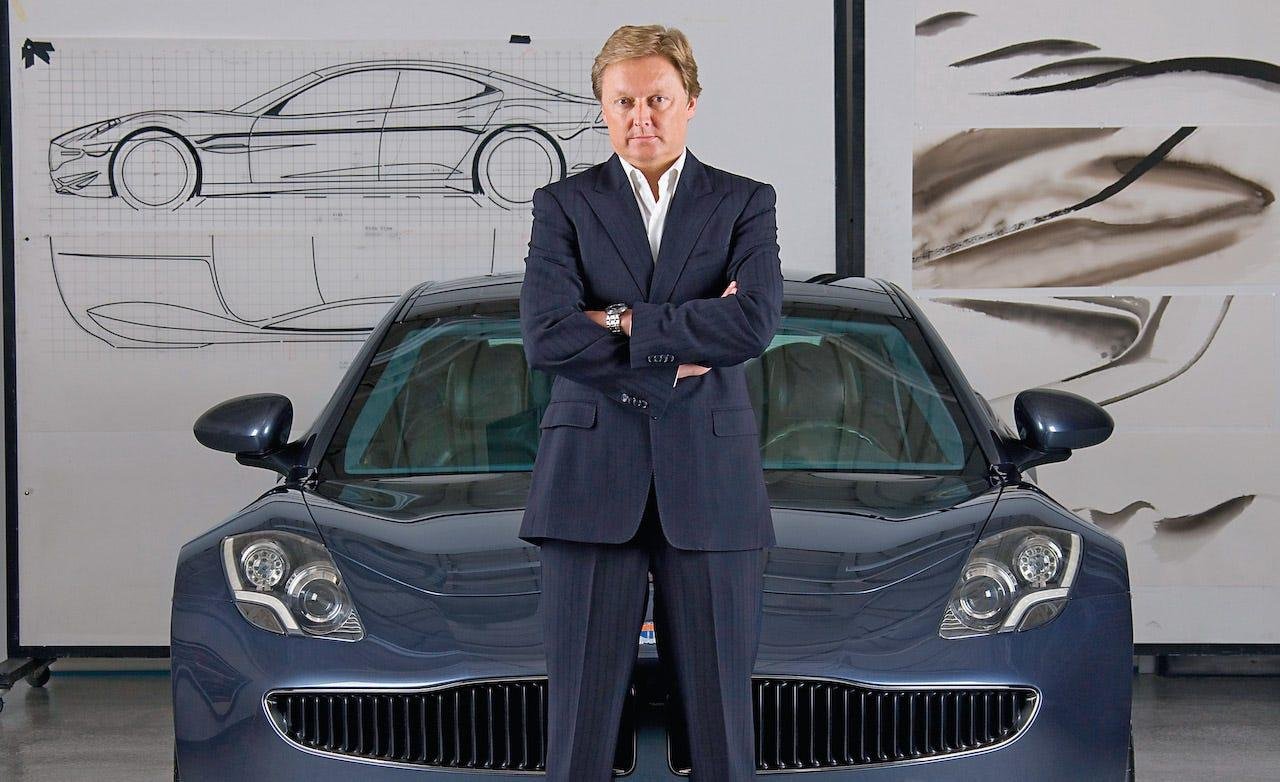
Henrik Fisker is a Danish automotive designer and entrepreneur recognized for creating distinctive luxury vehicle designs and pursuing electric vehicle development.
Unlike Mikitani, whose career is closely connected to digital services, Fisker built his reputation in the automotive industry.
He studied transportation design at the ArtCenter College of Design in California. His professional career included work with established automobile manufacturers, where he contributed to the development of high-profile vehicle designs.
Some of the vehicles associated with his design career include:
-
BMW Z8.
-
Aston Martin DB9.
-
Aston Martin V8 Vantage.
These vehicles helped establish his reputation for combining elegant styling with performance-oriented automotive design.
Henrik Fisker and Electric Vehicle Entrepreneurship
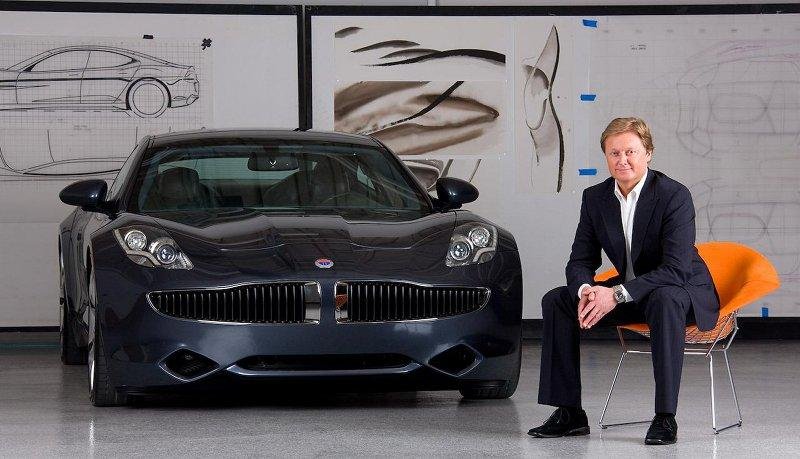
After gaining recognition as an automotive designer, Fisker pursued his own automotive business ventures.
One of his earlier ventures was Fisker Automotive, which introduced the Fisker Karma, a luxury plug-in hybrid vehicle.
The company attracted attention because it attempted to combine premium automotive styling with alternative powertrain technology.
Later, Fisker founded Fisker Inc., which developed the Fisker Ocean electric SUV.
The Ocean attracted interest from consumers and automotive observers because of its design, sustainability-focused features, and electric powertrain.
However, developing an attractive vehicle was only one part of the challenge. Manufacturing, financing, supply chains, distribution, and customer support created significant business pressures.
In June 2024, Fisker Inc. filed for Chapter 11 bankruptcy protection in the United States. Its liquidation plan was subsequently approved by the bankruptcy court in October 2024.
This development became a major turning point in Fisker’s entrepreneurial history.
Hiroshi Mikitani and Henrik Fisker: Career Comparison
Although both individuals are entrepreneurs, their professional strengths and business models are quite different.
Mikitani concentrated on building a technology ecosystem that connects consumers, merchants, and digital services. Fisker focused on vehicle design, automotive engineering, and electric mobility.
Their careers demonstrate two different approaches to innovation.
Comparison Table
| Category | Hiroshi Mikitani | Henrik Fisker |
|---|---|---|
| Nationality | Japanese | Danish |
| Main profession | Entrepreneur and business executive | Automotive designer and entrepreneur |
| Industry | Technology and e-commerce | Automotive and electric vehicles |
| Best known for | Founding Rakuten | Automotive design and Fisker businesses |
| Education | Hitotsubashi University, Harvard MBA | ArtCenter College of Design |
| Major achievement | Building Rakuten’s digital ecosystem | Designing internationally recognized vehicles |
| Business focus | Digital platforms and services | Vehicle design and electric mobility |
| Major challenge | Scaling a diversified technology group | Financing and manufacturing electric vehicles |
What Makes Their Business Strategies Different?
The most important difference between these entrepreneurs is how they approached business growth.
Mikitani’s ecosystem strategy
Mikitani developed a business model in which multiple services support one another. For example, an individual can shop through Rakuten, use its payment services, access financial products, and interact with other parts of its digital ecosystem.
This approach can encourage customer loyalty and create opportunities for cross-selling.
Fisker’s product-focused strategy
Fisker’s career demonstrates the importance of product design and innovation. His automotive ventures attempted to bring distinctive styling and electric vehicle technology to the consumer market.
However, automotive manufacturing requires significant investment in factories, engineering, suppliers, logistics, and after-sales support.
A creative product idea does not automatically create a financially sustainable automobile company.
Are Hiroshi Mikitani and Henrik Fisker Business Partners?
This is one of the most important questions associated with the keyword.
Based on the publicly available corporate profiles, biographies, and business records reviewed for this article, there is no verified evidence that Hiroshi Mikitani and Henrik Fisker have established a business partnership.
There is also no confirmed public record establishing that they:
-
Founded a company together.
-
Operated a joint venture.
-
Made a publicly documented direct investment in each other’s businesses.
-
Shared an executive position in the same company.
-
Have a publicly established family relationship.
Mikitani’s documented business activities are primarily associated with Rakuten and its related companies. Fisker’s professional history centers on automotive design and his independent automotive ventures.
It is important not to confuse two people appearing together in an online search with evidence of a commercial relationship.
Why Are Their Names Searched Together?
There are several possible reasons people may search for both entrepreneurs.
Interest in successful entrepreneurs: Both have attracted international attention through their business achievements.
Innovation and technology: Their work involves developing new business models and products.
Investment curiosity: Readers may want to understand whether technology investors have connections to electric vehicle companies.
Business comparisons: Their careers provide an interesting comparison between digital entrepreneurship and automotive manufacturing.
These are reasonable research interests, but they do not establish a direct relationship.
What Can Entrepreneurs Learn From Hiroshi Mikitani and Henrik Fisker?
The careers of both individuals offer practical lessons for people starting or managing businesses.
1. Understand Your Market Before Building a Product
Mikitani recognized an opportunity in online retail when internet shopping was still developing in Japan.
His approach demonstrates the value of identifying an underserved market and creating a platform that addresses genuine customer needs.
Entrepreneurs should research their target audience, existing competitors, and potential demand before investing heavily in a new idea.
2. Innovation Needs a Sustainable Business Model
Fisker’s automotive ventures demonstrate that attractive designs and innovative technology are not enough to guarantee long-term business success.
Companies also need:
-
Reliable manufacturing.
-
Adequate working capital.
-
Strong supplier relationships.
-
Effective distribution.
-
Customer service infrastructure.
-
Realistic financial planning.
These factors are particularly important in industries with expensive production requirements.
3. Build a Strong Brand Identity
Both entrepreneurs became associated with recognizable business identities.
Rakuten developed a distinct identity around online services and its merchant ecosystem. Fisker’s automotive career became associated with distinctive vehicle styling and electric mobility.
A recognizable brand can help a company attract customers, establish trust, and differentiate itself from competitors.
4. Prepare for Financial and Operational Risks
Business expansion creates opportunities, but it also introduces financial pressure.
Mikitani’s technology ecosystem and Fisker’s automotive ventures operate under different economic conditions. Their experiences show why business owners must understand their industry’s capital requirements and operational risks.
A realistic growth strategy should balance innovation with financial discipline.
The Role of Technology in Their Business Journeys
Technology played an important role in both entrepreneurial careers, although its application differed considerably.
For Mikitani, the internet provided an opportunity to connect businesses and consumers through online marketplaces. Digital payments, financial services, and telecommunications later became additional parts of Rakuten’s operations.
For Fisker, technological innovation was closely connected to electric vehicles, battery systems, automotive engineering, and vehicle manufacturing.
Digital Technology Versus Automotive Technology
| Business area | Rakuten’s approach | Fisker’s automotive approach |
|---|---|---|
| Core technology | Internet platforms | Vehicle and electric powertrain technology |
| Main users | Online shoppers and businesses | Vehicle owners and drivers |
| Infrastructure | Digital networks and services | Manufacturing and supply chains |
| Innovation focus | E-commerce and fintech | Vehicle design and electrification |
| Growth requirements | Technology investment and market expansion | Capital, production, and distribution |
This comparison shows that technology entrepreneurship does not follow one universal model. Different industries require different resources, expertise, and management decisions.
What Happened to Fisker Inc.?
Fisker Inc.’s financial difficulties are an important part of Henrik Fisker’s business history.
The company faced substantial financial and operational challenges while attempting to establish its electric vehicle business.
On June 17 and June 19, 2024, Fisker-related companies filed for Chapter 11 bankruptcy protection in the United States. The proceedings took place in the U.S. Bankruptcy Court for the District of Delaware.
In October 2024, the court approved a liquidation plan. The plan became effective on October 17, 2024, and a Fisker Liquidating Trust was established to handle relevant remaining assets and claims.
SEC+2
The development illustrates the financial challenges associated with launching an electric vehicle manufacturer.
It is also important to distinguish between Henrik Fisker’s personal professional identity and the legal status of Fisker Inc. The company’s bankruptcy does not erase his earlier automotive design achievements.
Hiroshi Mikitani’s Continuing Business Influence
Rakuten remains the central part of Hiroshi Mikitani’s professional legacy.
The company’s activities extend beyond traditional e-commerce, covering financial technology, communications, digital content, and other internet services.
Rakuten’s official leadership information identifies Mikitani as its founder and chairman and CEO.
Rakuten Mobile, Inc.+1
His career is particularly relevant to entrepreneurs interested in:
-
Digital business development.
-
E-commerce platforms.
-
International expansion.
-
Financial technology.
-
Customer retention.
-
Technology-driven business ecosystems.
His experience demonstrates how a company can develop from a focused online marketplace into a diversified technology group.
Frequently Asked Questions
1. Who are Hiroshi Mikitani and Henrik Fisker?
Hiroshi Mikitani is a Japanese entrepreneur and founder of Rakuten Group. Henrik Fisker is a Danish automotive designer and entrepreneur known for designing luxury vehicles and developing electric vehicle businesses.
2. Are Hiroshi Mikitani and Henrik Fisker business partners?
There is no verified public documentation establishing a direct business partnership between the two. Their professional careers are associated with different companies and industries.
3. What is Hiroshi Mikitani famous for?
He is best known for founding Rakuten in 1997 and developing it into a major Japanese technology and e-commerce group.
4. What is Henrik Fisker famous for?
Henrik Fisker is recognized for his automotive design work, including the BMW Z8 and Aston Martin DB9, as well as his electric vehicle ventures.
5. Did Hiroshi Mikitani invest in Fisker Inc.?
The public sources reviewed for this article do not establish a verified direct investment by Mikitani in Fisker Inc. Claims suggesting otherwise should be supported by reliable corporate announcements or financial records.
6. What happened to Henrik Fisker’s automotive company?
Fisker Inc. filed for Chapter 11 bankruptcy protection in June 2024. Its liquidation plan became effective in October 2024.
Reuters+1
7. What is the main difference between Mikitani and Fisker?
Mikitani built a diversified digital services business, while Fisker focused on automotive design and electric vehicle entrepreneurship.
8. What can business owners learn from their careers?
Their experiences highlight the importance of understanding customers, developing a sustainable business model, managing financial risks, investing in innovation, and building a recognizable brand.
9. Are Hiroshi Mikitani and Henrik Fisker from the same country?
No. Hiroshi Mikitani is Japanese, while Henrik Fisker is Danish.
10. Why do people compare these two entrepreneurs?
Their names are associated with innovation, business leadership, and entrepreneurship. Comparing them offers insight into the differences between technology businesses and automotive companies.
Conclusion
The professional stories of Hiroshi Mikitani and Henrik Fisker demonstrate two different approaches to entrepreneurship. Mikitani built Rakuten into a diversified technology ecosystem, while Fisker pursued automotive design and electric vehicle development.
Although there is no verified public evidence of a direct business partnership between them, their careers offer valuable lessons about innovation, leadership, investment, and business sustainability.
For entrepreneurs, the biggest lesson is that a strong idea must be supported by effective execution, financial planning, and a clear understanding of the market.
Interested in more business leadership and technology insights? Explore our other articles covering entrepreneurs, innovative companies, digital transformation, and the future of global business.